13 hr
Sólheimajökull Blue Ice Glacier Hike near Vík
- Expert local guide
- Small group
- Skip-the-line access
- Free cancellation
Sólheimajökull Glacier Hike — Guided Ice Walks and Reserved Departures
Ash-striped ice underfoot, the Atlantic wind at your back.
Compare fares, pick the fit — all bookings are mobile-voucher and eligible for free cancellation where shown.
13 hr
10 hr
11 hr
| Experience | Duration | Rating | Pickup | Skip-the-line | Guide | Small group | Price | |
|---|---|---|---|---|---|---|---|---|
|
Guided Experience
Most popular
Sólheimajökull Blue Ice Glacier Hike near Vík
|
13 hr | ★ 4.7 | — | ✓ | ✓ | ✓ | €92 | Book → |
|
Guided Experience
South Coast Waterfalls, Black Sand & Glacier Day Trip from Reykjavík
|
10 hr | ★ 4.8 | ✓ | ✓ | ✓ | ✓ | €115 | Book → |
|
Guided Experience
South Coast Day Trip: Glacier Hike, Waterfalls & Black Sand Beach
|
11 hr | ★ 4.8 | ✓ | ✓ | ✓ | ✓ | €174 | Book → |
Worth it for first-time glacier visitors
The solheimajokull glacier hike costs 750 ISK to park, and that fee alone buys the viewpoint: a short walk from the lot to a lagoon fronting a black-streaked outlet tongue of Mýrdalsjökull, with crevasses and ash bands visible without setting foot on ice. For a scenic stop, the value math is hard to beat in Iceland — a few hundred krónur for a genuine ice-front view. Stepping onto the ice is a different calculation. Crampons, harnesses and a certified guide are mandatory, so solheimajokull glacier hike tickets for the walking portion run into real money and a committed block of your day. That pays off if you want the moulins, ridges and blue ice up close, and if this is your first glacier anywhere. Sólheimajökull tours are less compelling if you have already walked ice in Alaska, Patagonia or the Alps, where the features are larger and the queues thinner.
Bottom line: Pay the 750 ISK for the view regardless; book a solheimajokull glacier hike tour only if this is your first time on ice.
They complement each other, but the guided glacier hike on Sólheimajökull is the one that lets you step onto the ice; independent visitors mostly get the viewpoint and glacier-edge walk. If your goal is a true glacier-walking experience, the guided option wins, while the self-guided stop suits quick sightseeing and photos.
|
Top pick Sólheimajökull glacier hike |
Guided glacier hike on Sólheimajökull | |
|---|---|---|
| Access level | Viewpoint and glacier edge | Parking lot to glacier ice |
| Can you step onto the ice? | — | |
| Guide and safety gear | Not included | Guide, crampons, helmet, axe |
| Typical use case | Quick self-guided stop | Hands-on glacier walk |
| Risk level | Lower, but rough terrain | Higher without guide |
| Who it suits | Sightseers and drivers | Active visitors and hikers |
| See tickets & prices |
Verdict: Choose the self-guided stop for easy access and photos, but pick the guided tour if you want the actual ice-walking experience with proper safety gear.
Hand-picked experiences loved by thousands of travelers
12 hours
Free Cancellation
Full-day trip to Iceland's south coast: waterfalls, black sand beaches, and a guided glacier hike.
5.5 - 13 hours
Free Cancellation
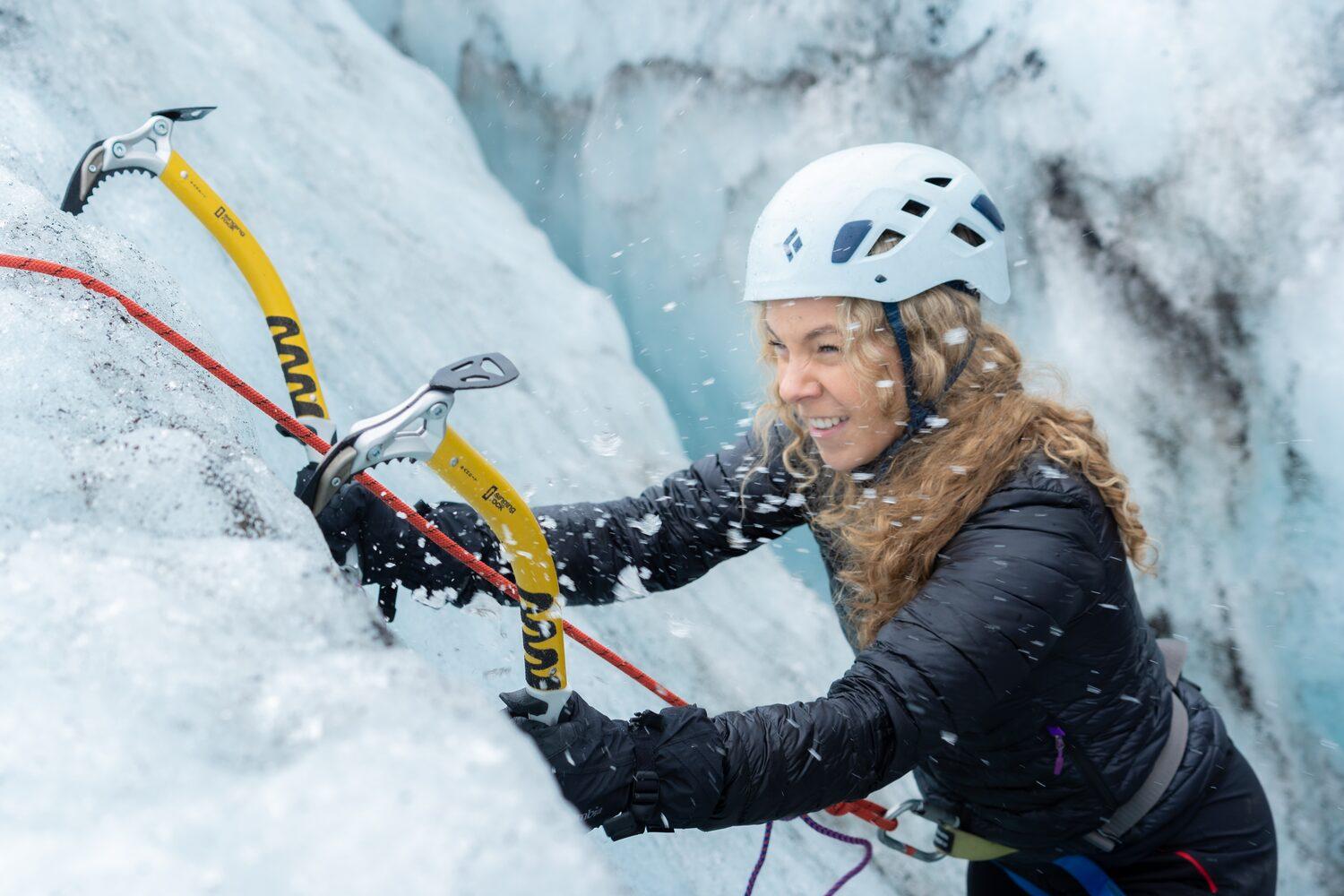
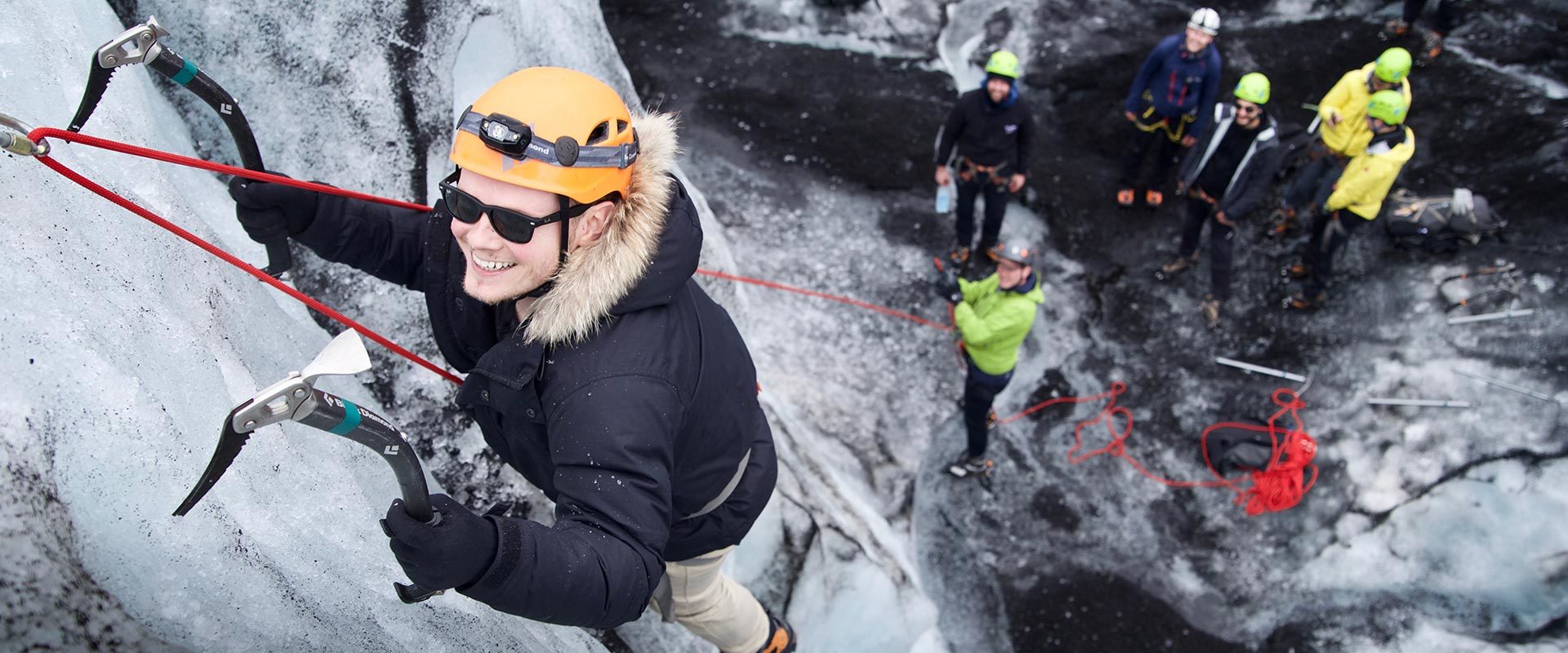
Strap on crampons, hike a living glacier, and try ice climbing on Iceland's South Coast.
4 hours
Free Cancellation
Strap on crampons and explore a real Icelandic glacier on this guided 4-hour small-group hike.
3 hours
Free Cancellation
Strap on crampons and trek across Sólheimajökull's icy landscape with a certified guide.
4 - 5.5 hours
Free Cancellation
Strap on crampons and trek across Sólheimajökull's ice ridges and blue crevasses with an expert guide.
4 hours
Free Cancellation
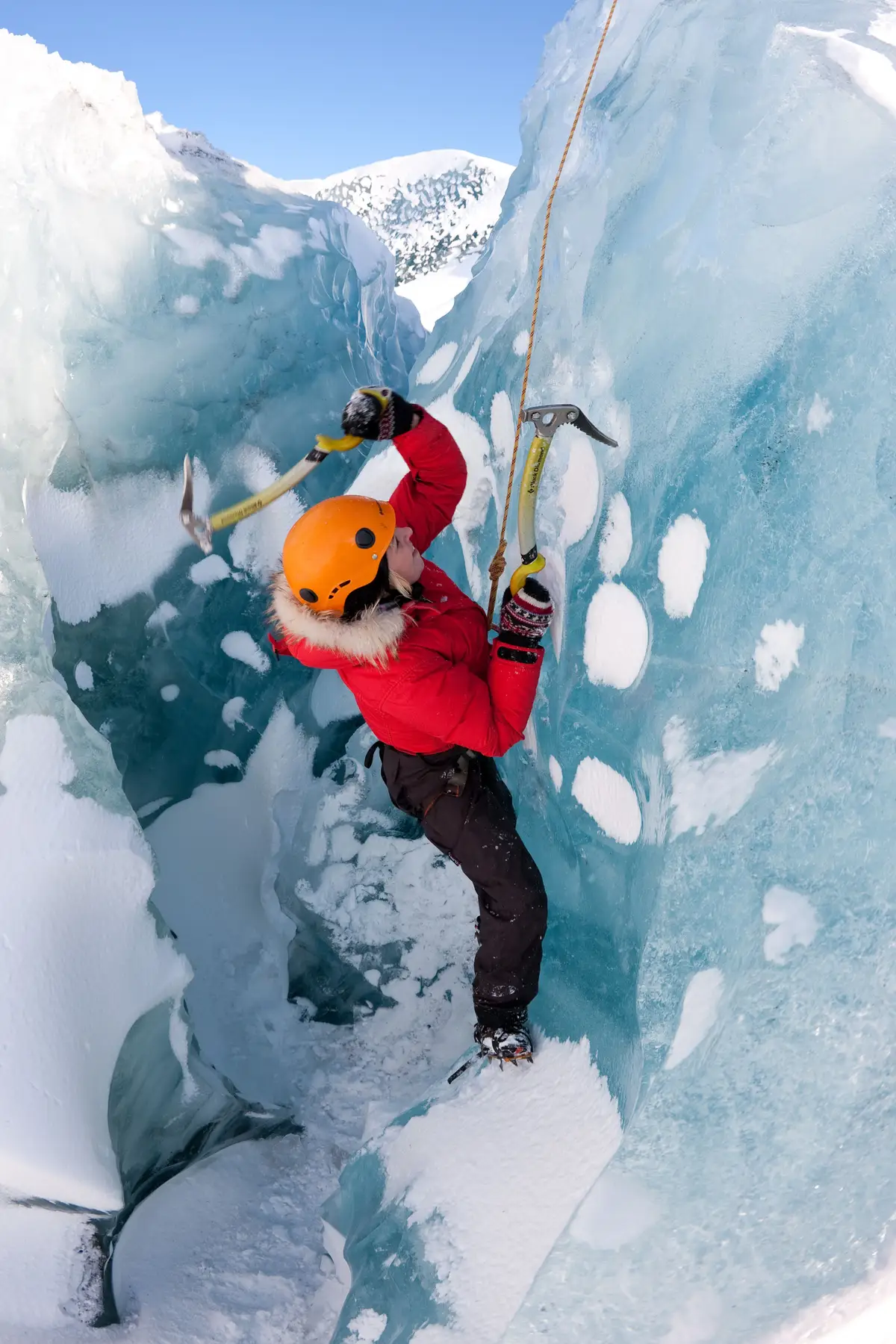
Strap on crampons and scale real ice walls on Iceland's Sólheimajökull glacier with a certified guide.
2.5 hours
Free Cancellation
Strap on crampons and explore the dynamic ice of Sólheimajökull glacier with a certified guide.
4 hours
Free Cancellation
Escape the crowds on a private guided glacier hike across Iceland's ever-shifting Sólheimajökull ice cap.
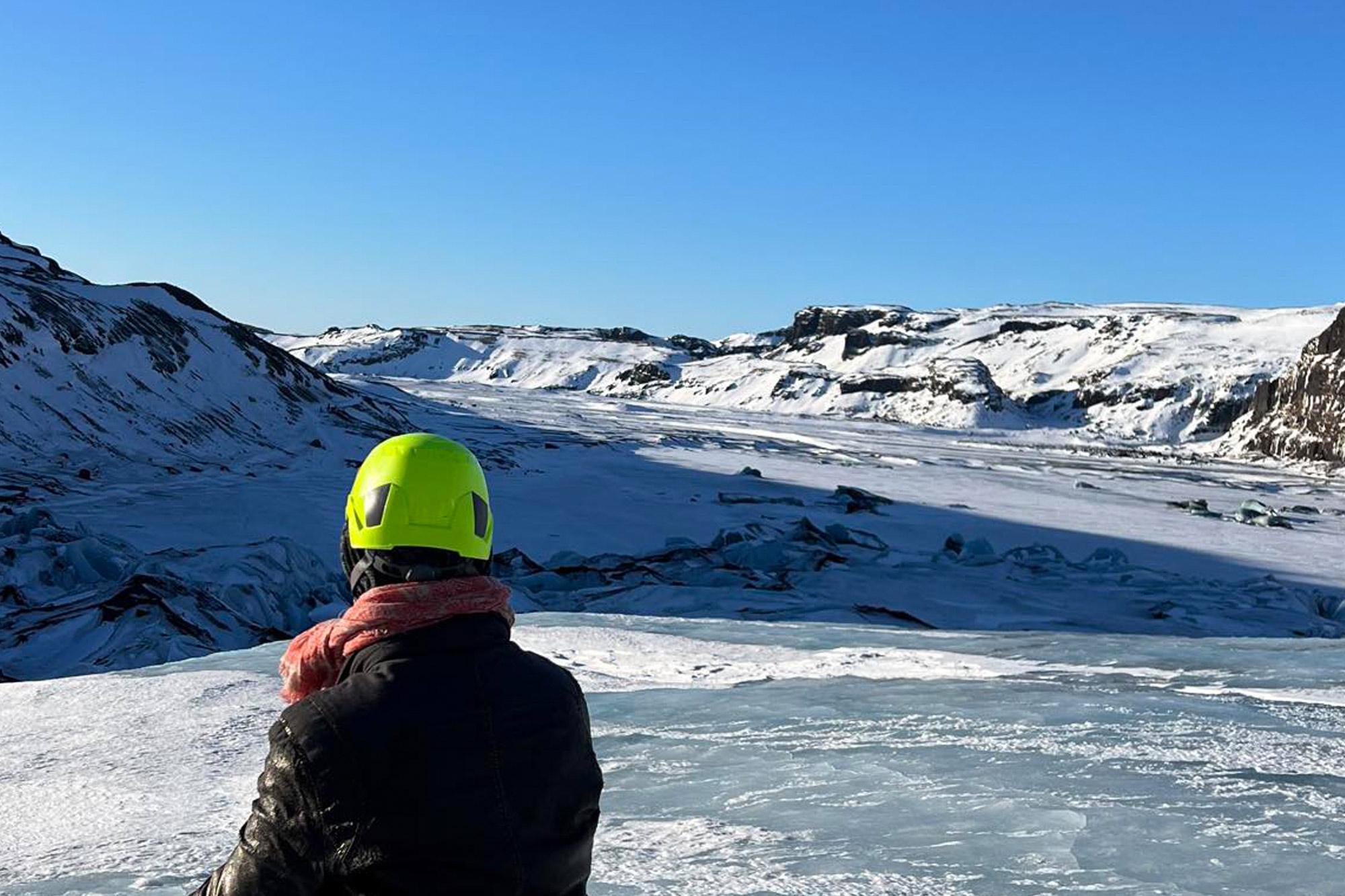
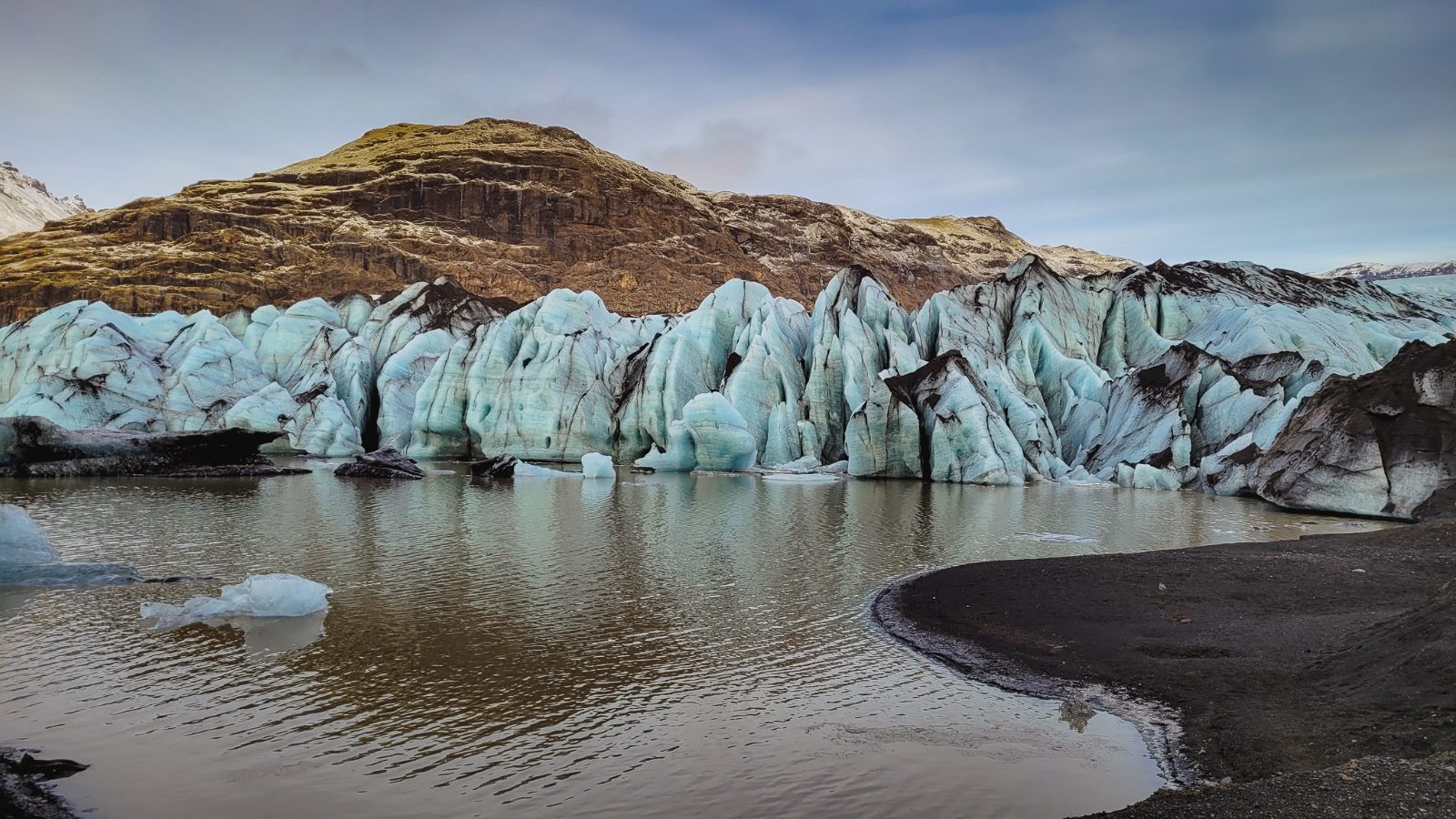
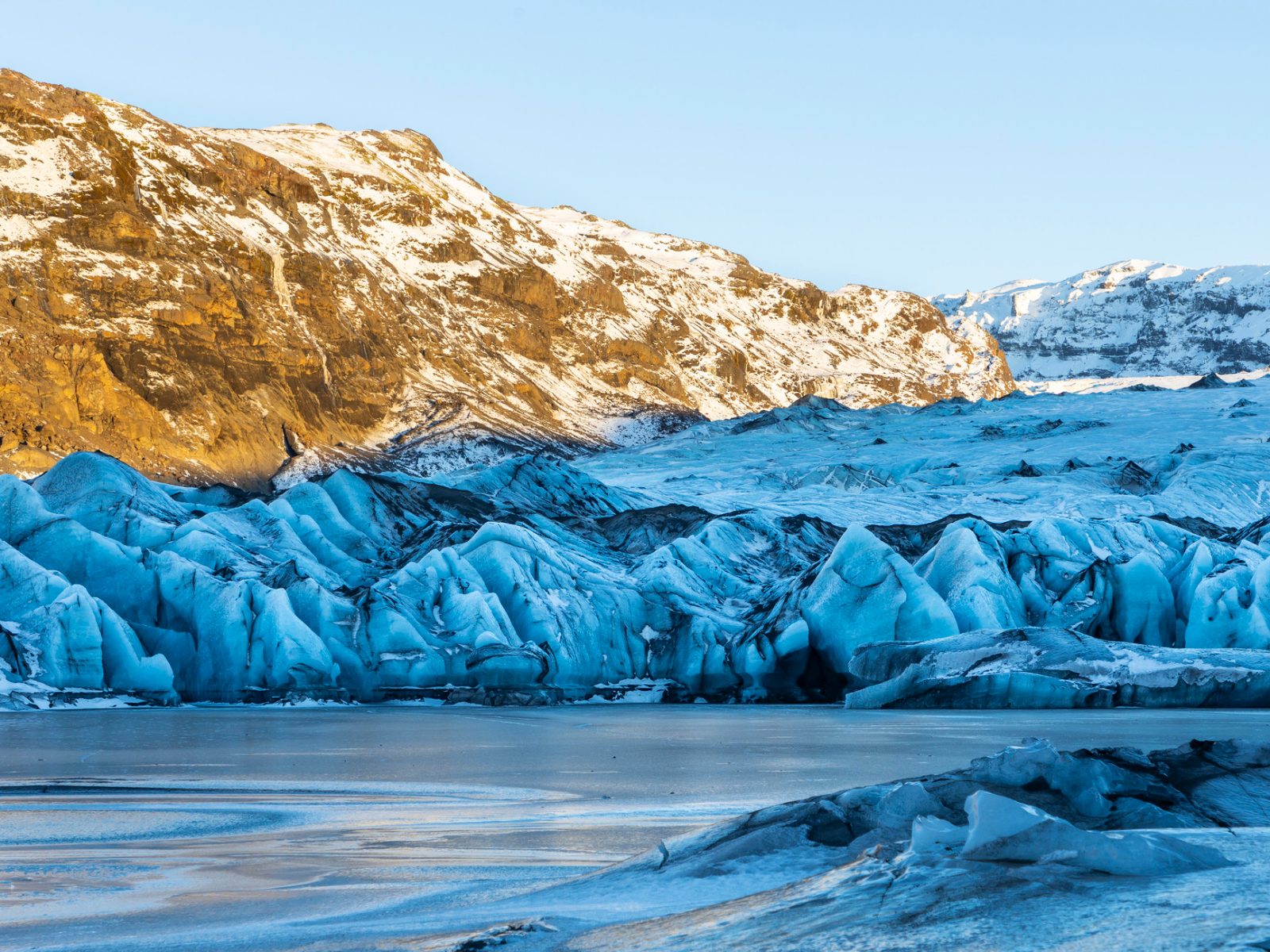
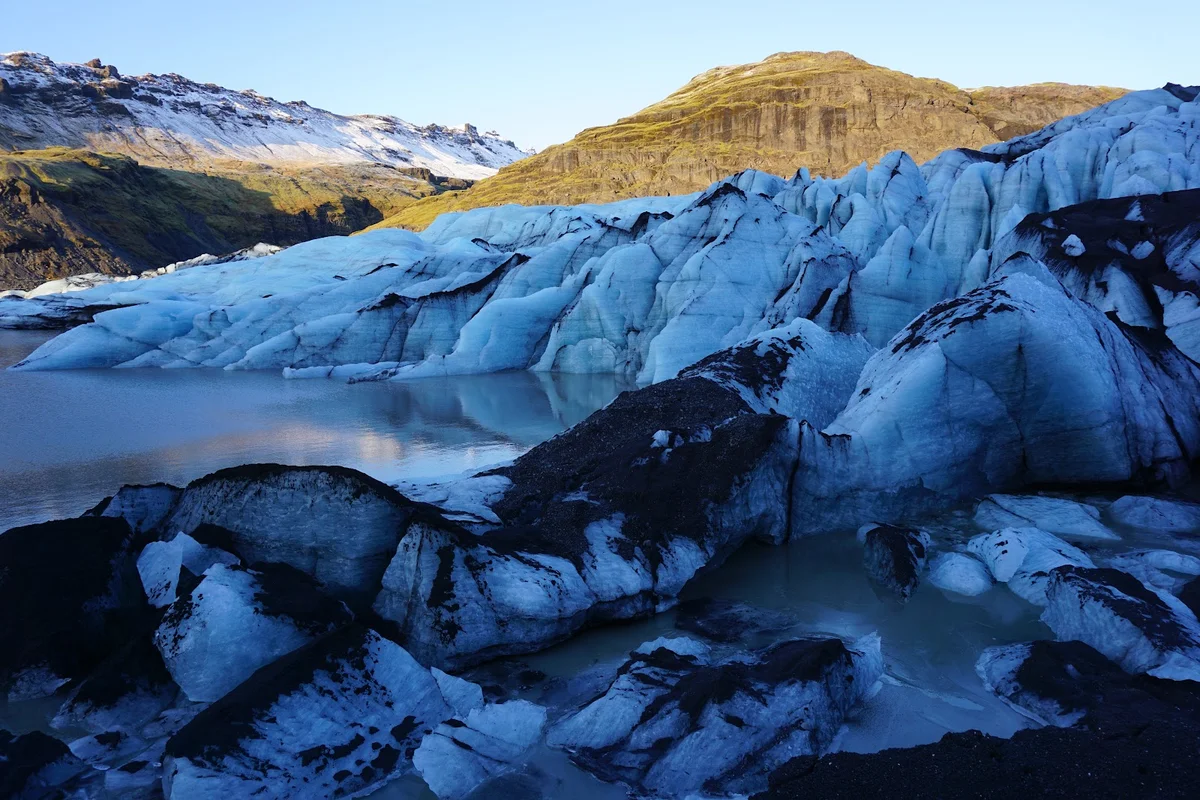
This is the main ice tongue visitors come to see, extending from Mýrdalsjökull. The site’s official information describes it as an outlet glacier, and the approach lets you compare ice, ash, and meltwater features in one short visit.
Glacier Viewpoint
Glacier Edge
Mýrdalsjökull Viewpoint
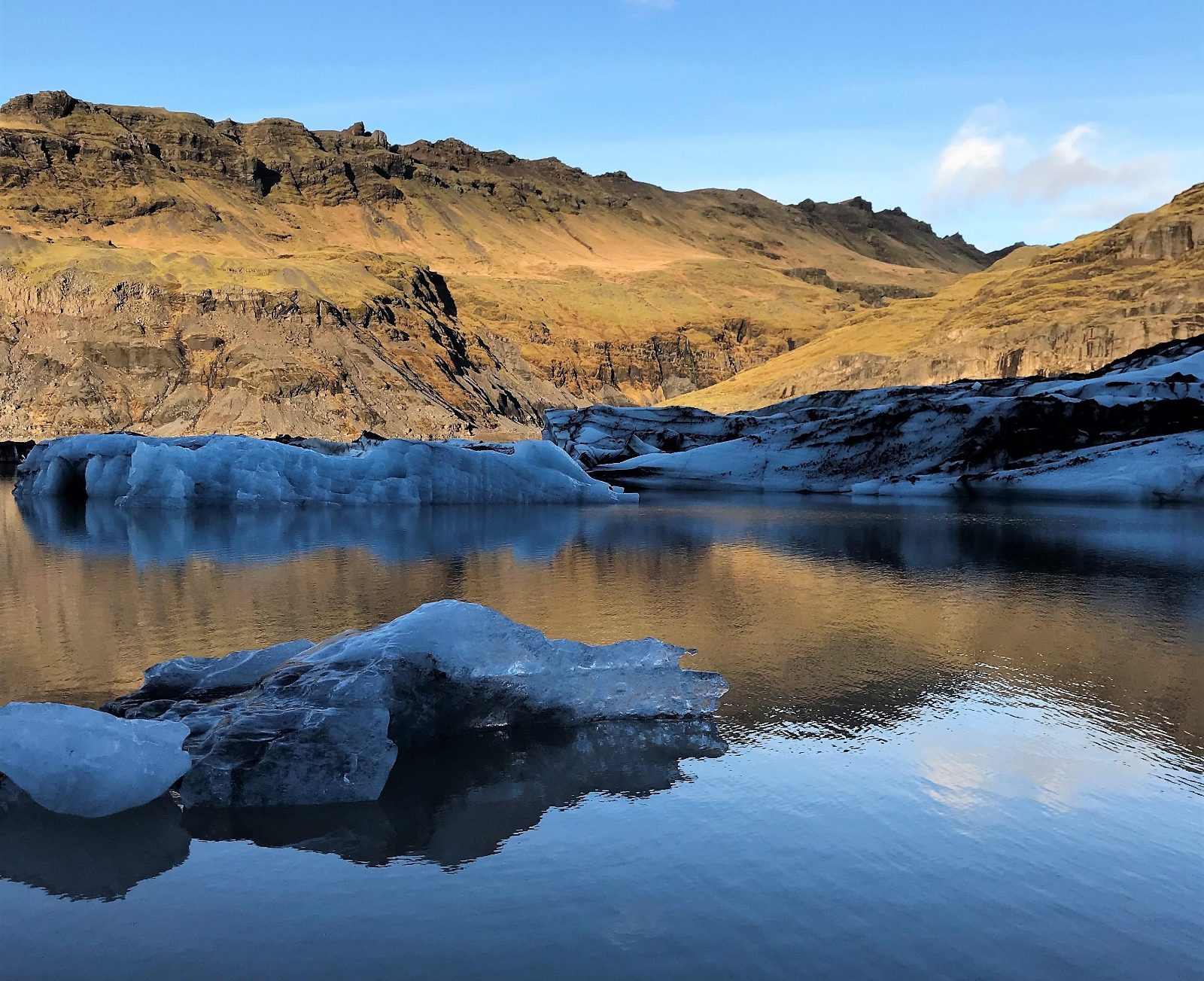
Glacier Lagoon
All the details about your upcoming adventure in one place
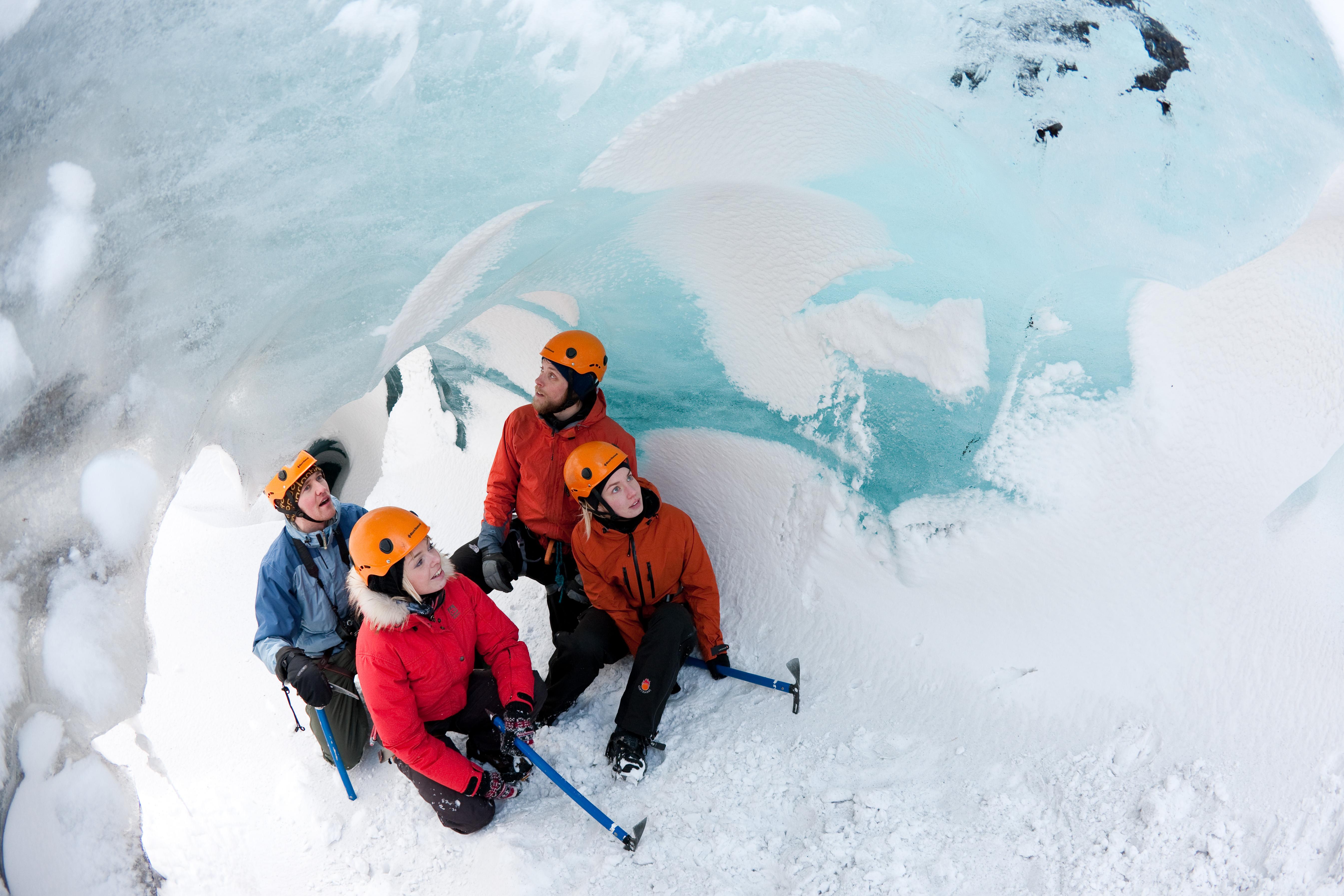
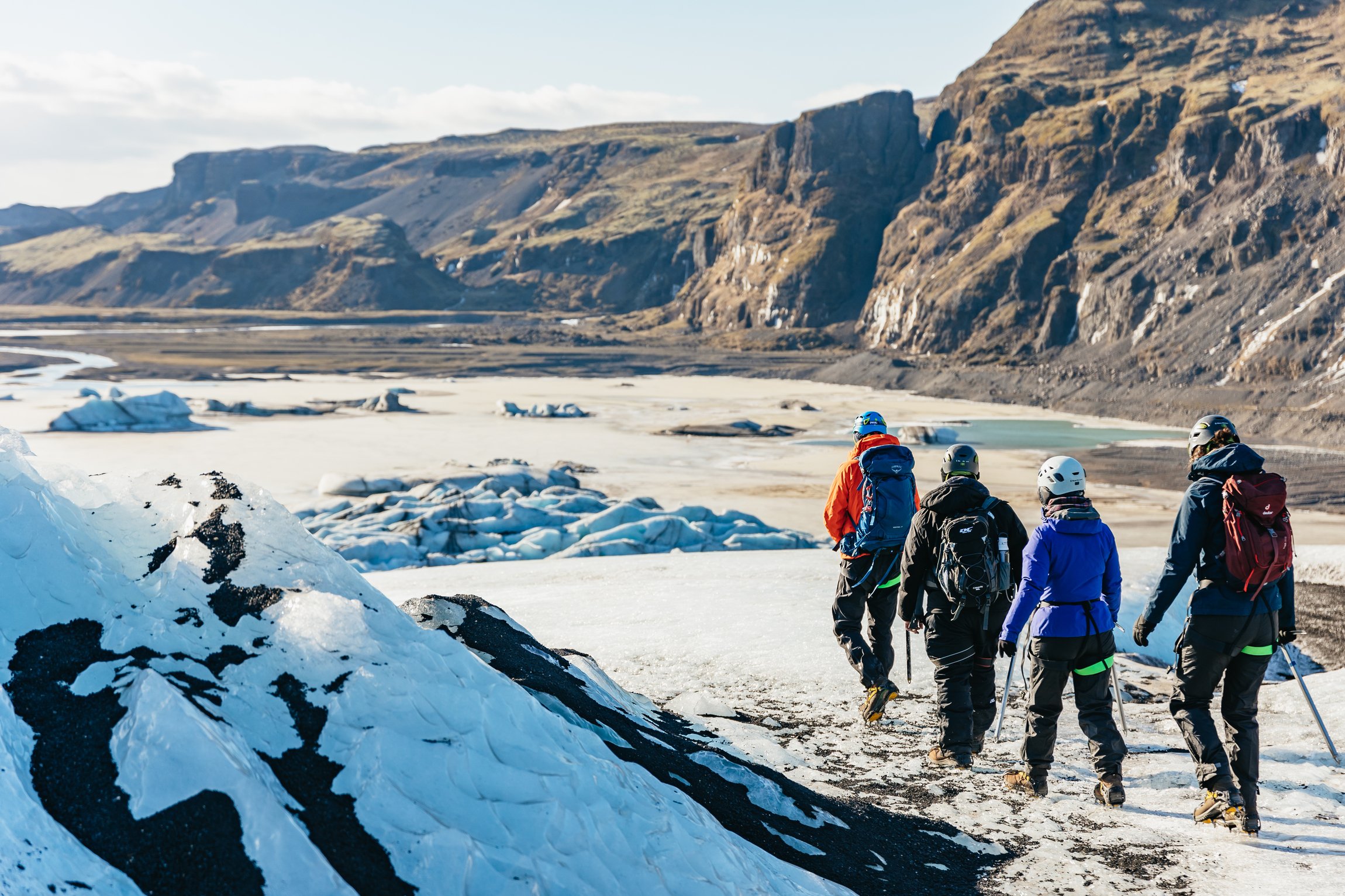
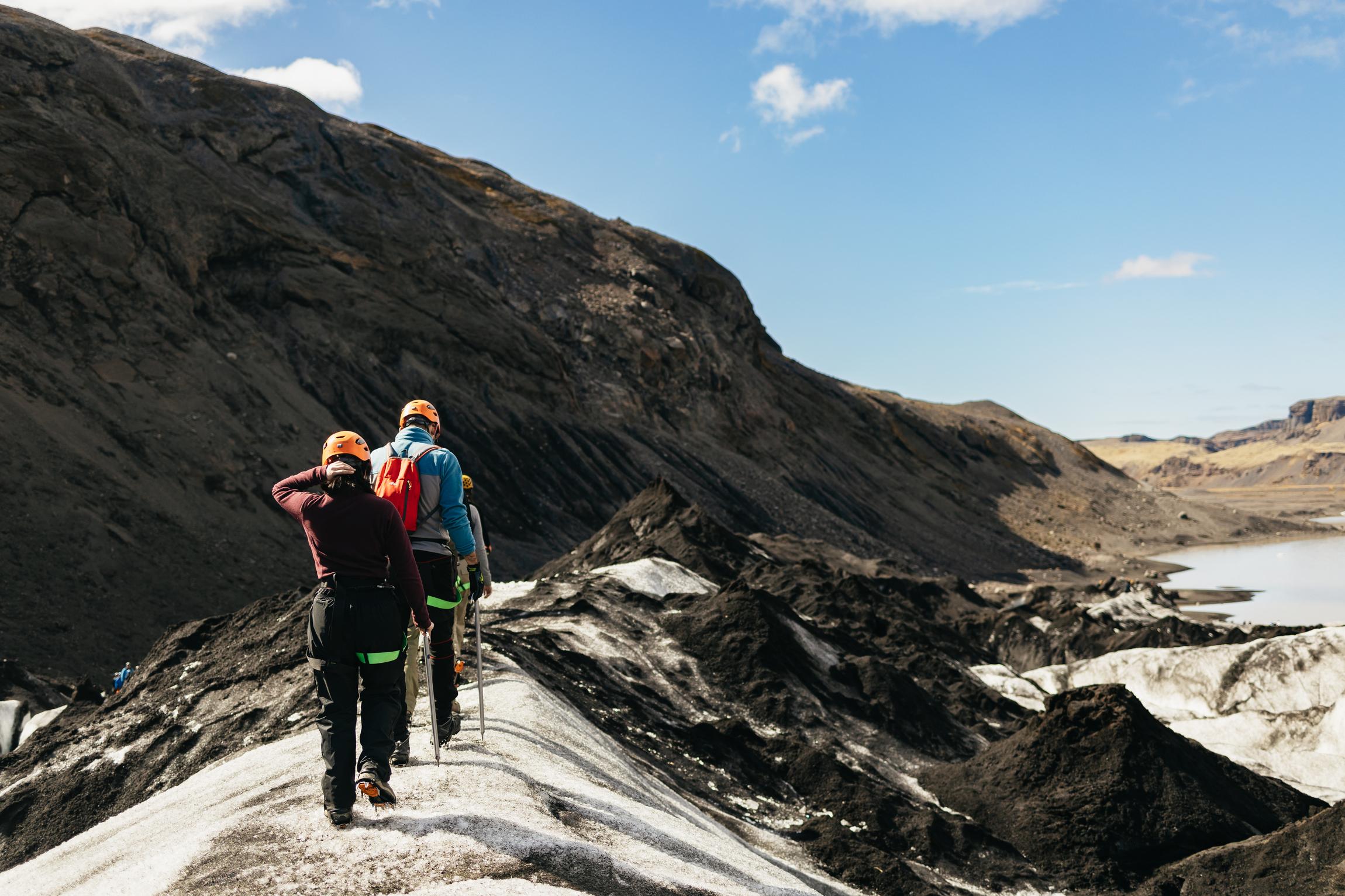
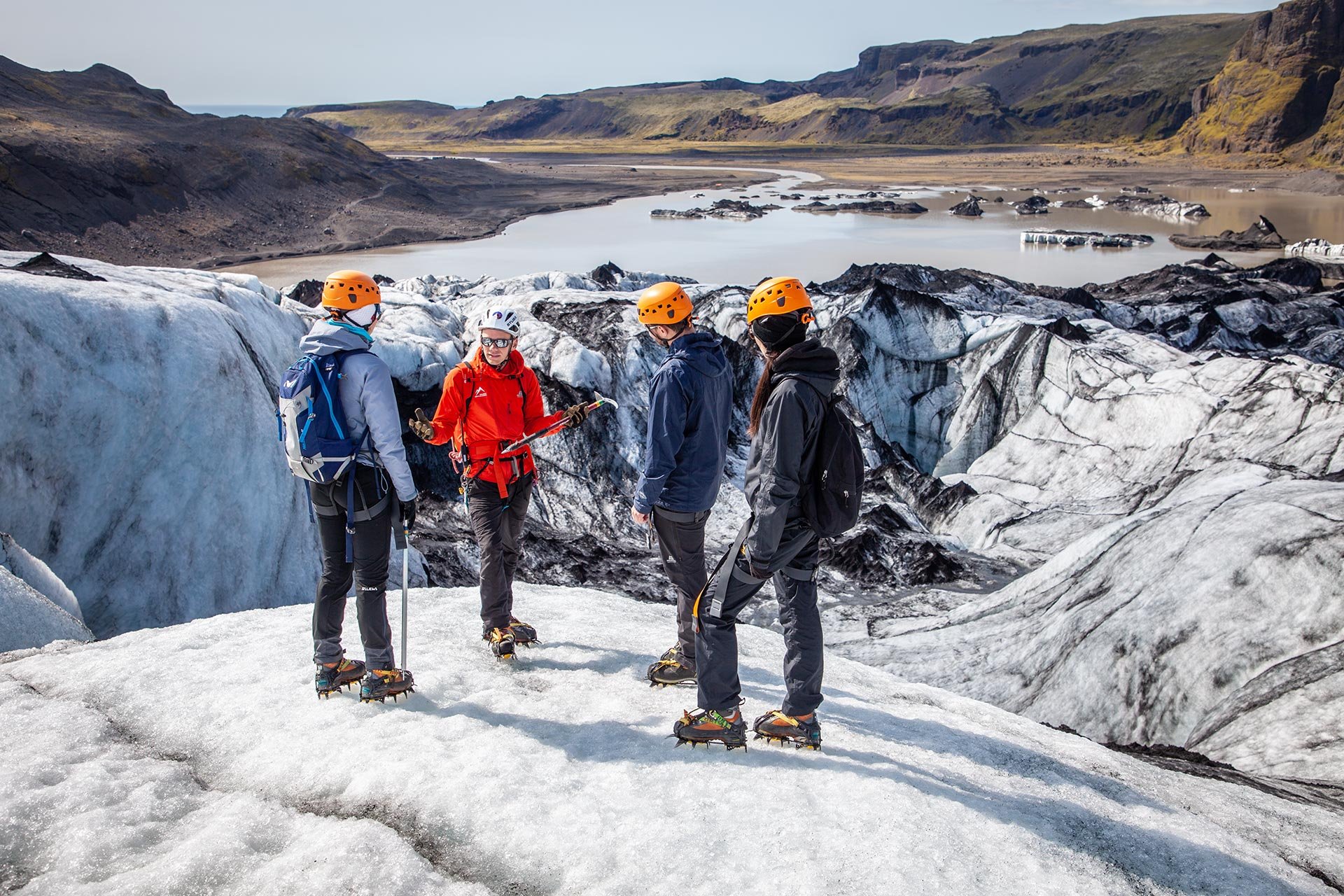
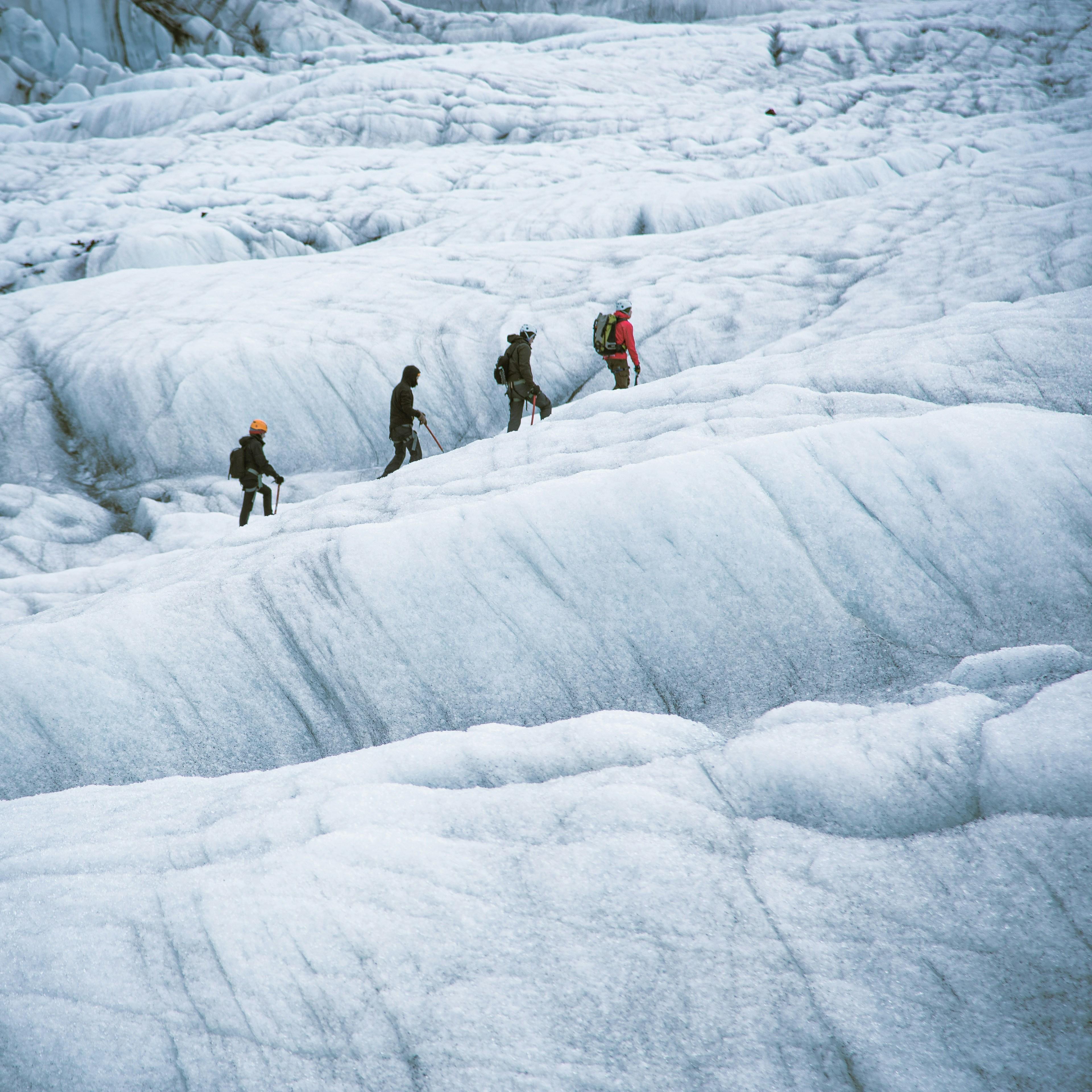
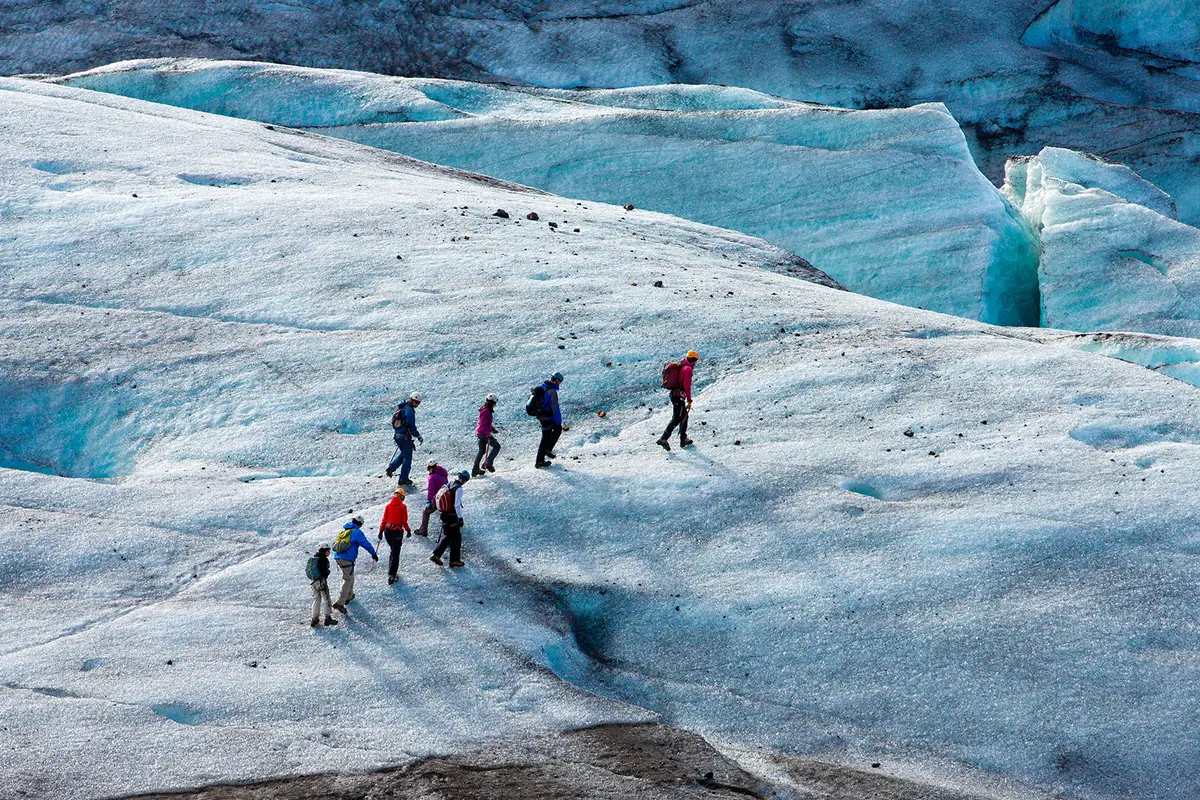
Sólheimajökull is an outlet tongue of the Mýrdalsjökull ice cap, and the solheimajokull glacier hike leads you across ridged blue ice past crevasses, moulins and ash bands left by past Katla eruptions. Crampons, harness and ice axe are handed out at the moraine edge, and a certified glacier guide sets the pace so first-timers manage the terrain comfortably. Most solheimajokull glacier hike tours cover roughly two kilometres of ice, with sinkholes and meltwater channels marked out along the way.
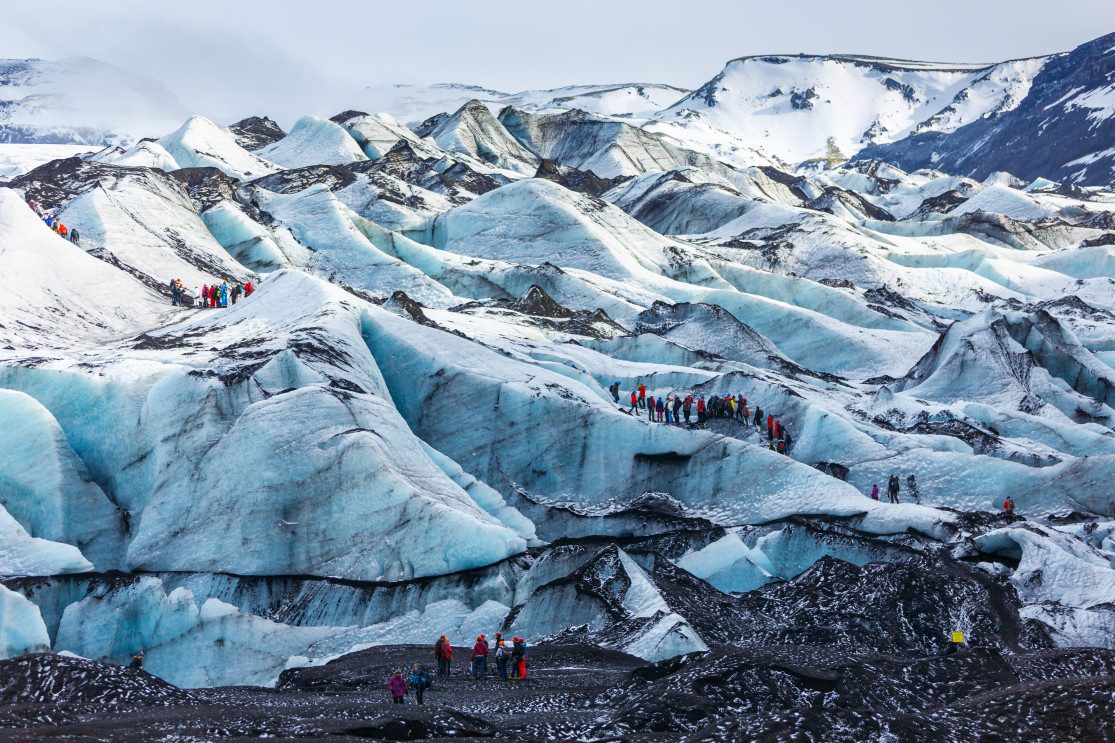
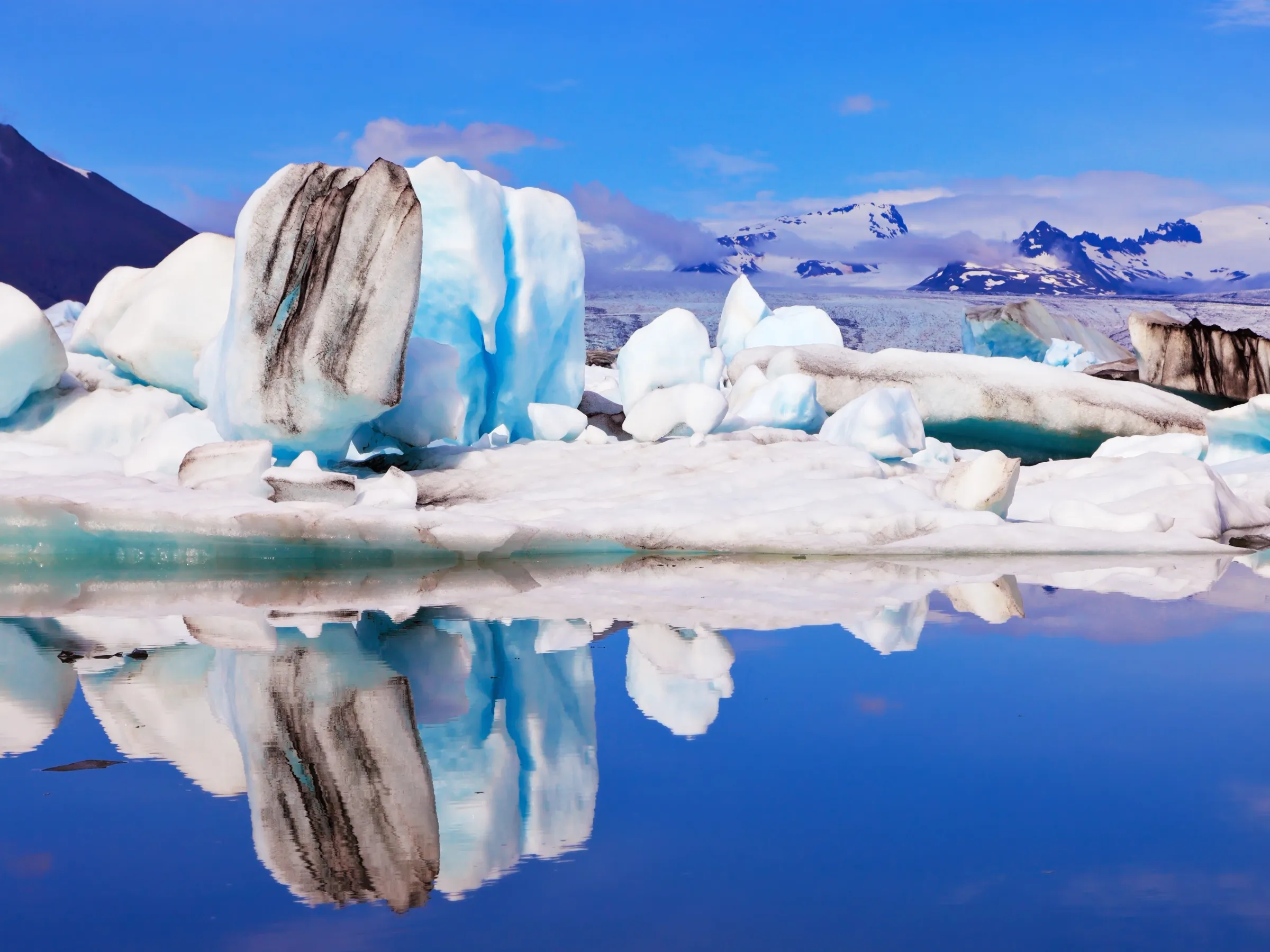
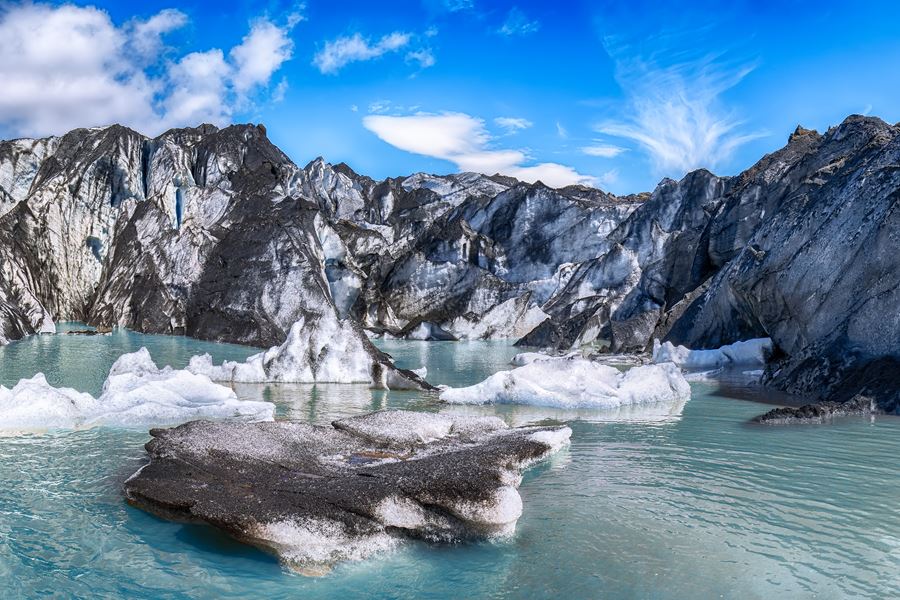
Sólheimajökull's ice is not white. Ash from Katla and Eyjafjallajökull has settled across it in dark bands, and each melt season exposes another layer, so the surface reads grey, charcoal and dull blue at once. This is the first thing that surprises arrivals expecting alpine brilliance.
A Sólheimajökull glacier hike begins on stone and ends on a surface that looks geological rather than frozen.
The glacier is an outlet tongue of Mýrdalsjökull, Iceland's fourth-largest ice cap, which in turn sits over the Katla volcanic system. It descends roughly eight kilometres southwest toward the black sands of Sólheimasandi and terminates in a meltwater lagoon fed by Jökulsá á Sólheimasandi, a river faintly sulphurous from the geothermal heat beneath. Farmers in the district recorded the ice's movements long before instruments did, and the name refers plainly to the neighbouring farm, Sólheimar. Solheimajokull glacier hike tours — a jöklaganga, in Icelandic — have run here since the 1990s, when local mountaineering clubs began converting expedition technique into guided walking.
What makes the place matter now is proximity. Few glacier tongues anywhere sit this close to a national ring road. Route 221 leaves Route 1 and reaches the ice within a few kilometres, which is why this tongue appears in more itineraries than glaciers twice its size. It also explains the questions that circle it: difficulty, whether the ice can be walked without a guide, whether ice cave exploration belongs in the same outing. Those debates are practical ones. The ice itself answers to nothing.
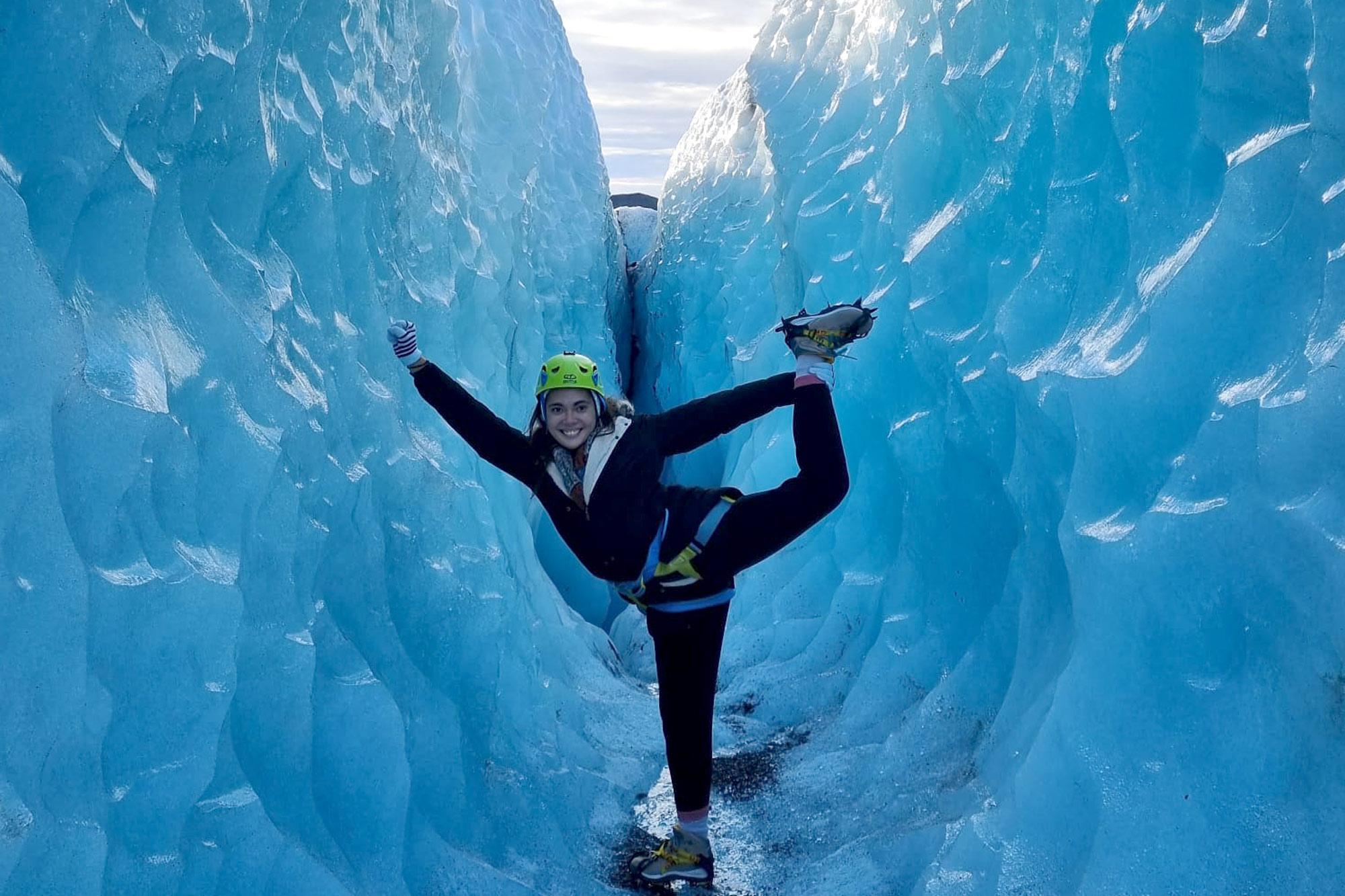
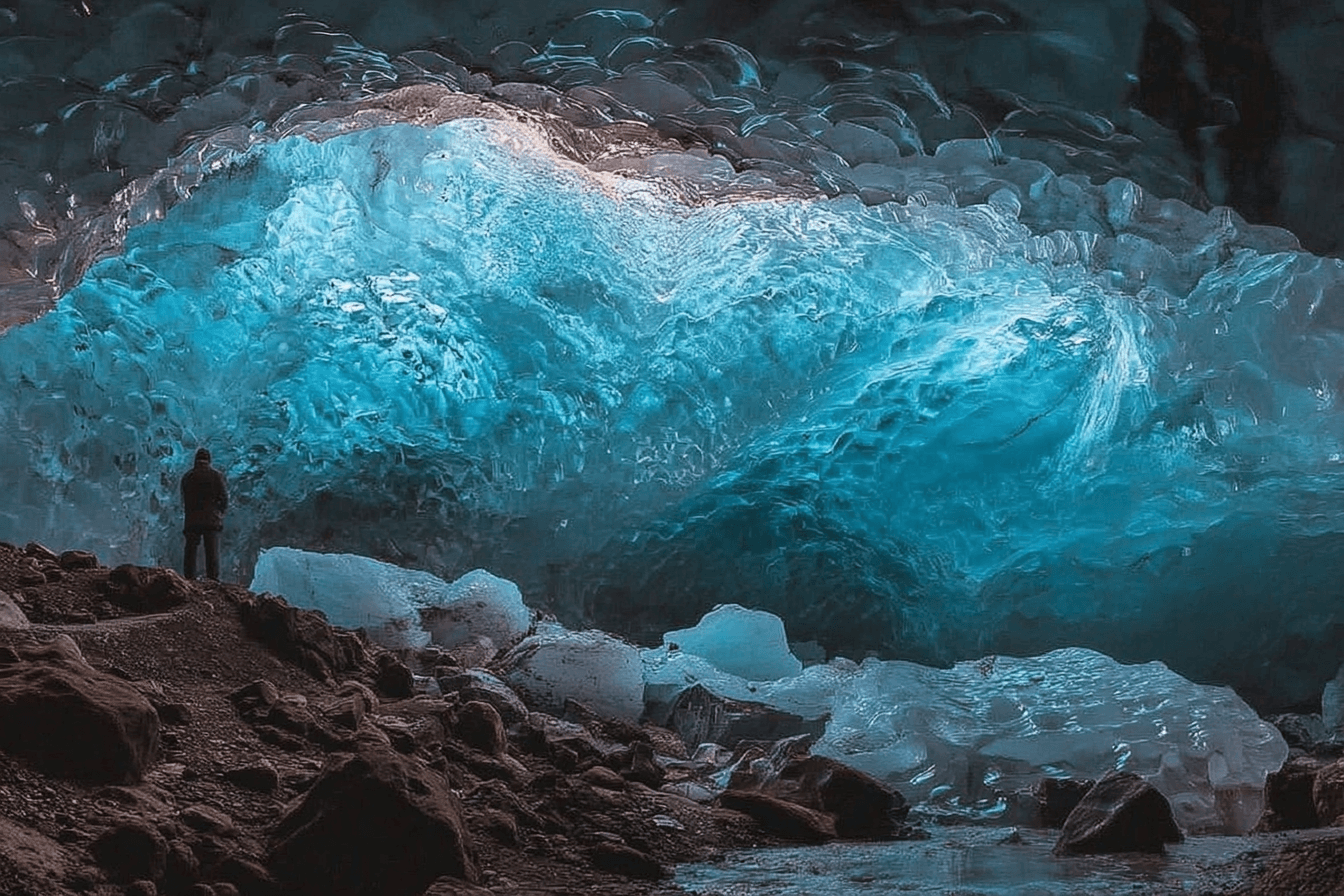
Its architecture rewards slow reading. Crevasses open along the flow lines where the tongue bends. Moulins — vertical shafts drilled by meltwater — swallow whole streams without noise. Séracs stand in unstable blocks below the icefall, and crampons bite differently on each: hard blue ice takes a point cleanly, sun-cupped white ice crumbles underfoot. Ridges of moraine flank the valley, ground from the mountainsides and delivered here as rubble. The terminus lagoon carries small bergs that turn slowly in the wind. Within Katla UNESCO Global Geopark this is the most legible teaching surface in south Iceland, a place where the mechanics of a moving glacier are visible without a single instrument. A solheimajokull glacier hike tour is, at heart, an hour or two spent standing on top of a process.

The ice at Sólheimajökull is grey, not white, and every dark band in it was once an eruption.
Guided solheimajokull glacier hike bookings are typically refundable only within the operator’s stated window, which many third-party tours list as up to a day or two before departure. The 750 ISK parking fee is separate and is not a tour ticket.
Sólheimajökull is an outlet glacier of Mýrdalsjökull, Iceland's fourth-largest ice cap. The tongue descends roughly 8 kilometres from the icefield toward the coastal lowland, draining meltwater into the Jökulsá á Sólheimasandi. Beneath Mýrdalsjökull sits Katla, one of the island's most active volcanic systems. Its eruptions have written themselves into the ice. Dark tephra bands, visible in the crevasse walls, record fallout from events such as the 1918 eruption, which sent a jökulhlaup across the sands to the east. This volcanic signature is what gives a solheimajokull glacier hike its striated grey-and-white surface, unlike the cleaner blue ice of glaciers farther from active vents. Measured retreat began early here. Icelandic glaciologists have monitored the terminus since 1930, one of the longest continuous records in the country. Between 1930 and 2020 the snout withdrew well over a kilometre. Photographic comparison at the site has become a standard teaching device, and the Icelandic Glaciological Society's annual front measurements remain the reference dataset. Retreat accelerated after 2000, and by 2010 a proglacial lagoon had formed where solid ice once stood, deepening each season as the terminus calved backwards. The lagoon changed access. Where visitors once walked directly onto the ice from firm ground, the approach path lengthened, and by the mid-2010s operators had reshaped their routes accordingly. That transformation, paradoxically, made the site famous. Its proximity to Route 1 turned this ice tongue into the South Coast's most reachable glacier, and solheimajokull glacier hike tours multiplied through the decade. Guided crampon walks on the Mýrdalsjökull outlet now anchor the region's ice-climbing scene, and a solheimajokull glacier hike tour has become the standard introduction to Icelandic glacier travel. Bookings for solheimajokull glacier hike tickets follow the same seasonal rhythm the meltwater does — the ice recedes, and the record continues.
A Katla eruption beneath Mýrdalsjökull deposits tephra that remains visible as dark ash bands in the glacier ice.
Systematic measurement of the Sólheimajökull terminus begins, forming one of Iceland's longest continuous glacier records.
The snout advances and retreats in cycles, briefly readvancing during the cooler mid-century decades.
Sustained warming ends the readvance phase and the terminus enters continuous rapid retreat.
A proglacial lagoon forms at the glacier front as calving outpaces ice flow.
Improved parking and marked approach paths establish the site as the most accessible glacier on Iceland's South Coast.
Cumulative retreat since 1930 exceeds one kilometre, with the lagoon continuing to deepen.
Annual front measurements by the Icelandic Glaciological Society continue at the site.
The main overlook gives a clean frame of the glacier tongue, lagoon, and ash-streaked ice, so stand near the roped edge and keep the ridge line low in frame for scale. This is the safest public angle and the most reliable stop on a solheimajokull glacier hike.
Walk to the water’s edge and shoot across the meltwater toward the glacier front for reflective foregrounds and layered depth. Use a wide lens from the flattened gravel beside the lagoon, but stay behind any barriers and off unstable ground.
From the maintained path beyond the parking lot, the glacier snout fills the frame more tightly, with crevasses and dirty ice showing best when you angle slightly off-center. This is the spot for dramatic texture shots, but access near the ice is limited and conditions can change quickly.
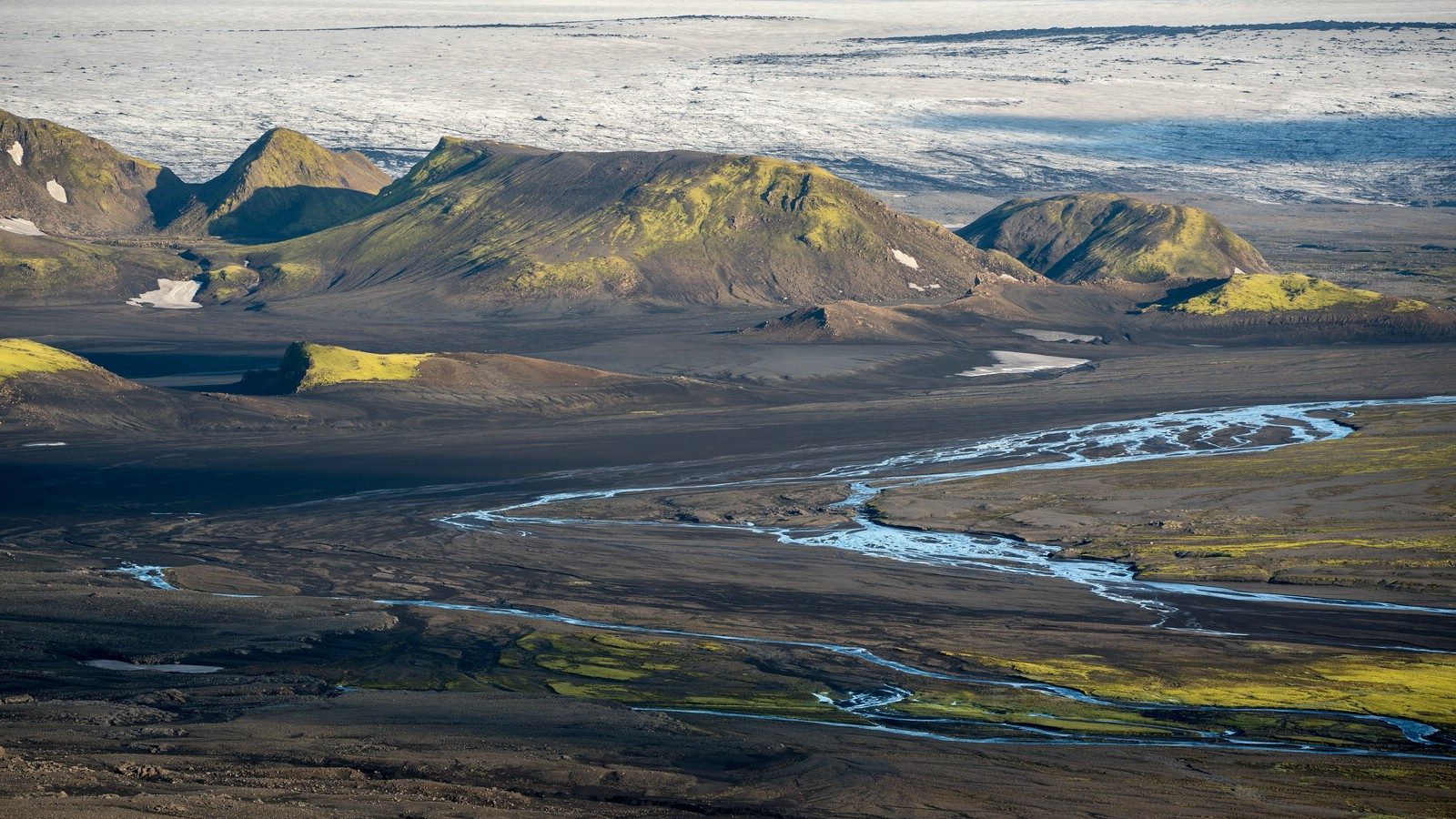
The higher viewpoint toward Mýrdalsjökull looks back over the ice cap that feeds Sólheimajökull, giving a broader landscape shot with mountains and glacier tongue in one frame. Use it for context shots rather than close-ups, especially when clouds break and add contrast.
The trailhead area is useful for a first wide establishing photo with the path leading the eye toward the glacier, especially if you want a clean human-scale composition before the walk. It also works well for a departure shot that shows the approach without crowding the main overlook.
A solheimajokull glacier hike works best for families with school-age kids who can handle a 15 to 20-minute walk from the parking lot and a three-hour guided outing. The viewpoint-only stop is much easier for younger children, while the glacier ice itself is better left to a guide-led excursion.
Do not plan on a stroller for the gravel walk to the viewpoint or the glacier edge; it is a walking route, not a paved family path. A baby carrier is the practical option if you are visiting with very young children.
Kids 8 and older can join some guided glacier hikes, so this is not a toddler-friendly ice walk. If your children tire quickly, keep their role to the parking lot and viewpoint and skip the crampons.
The parking lot has restrooms nearby, which helps with pre-hike breaks and quick stops. There are no family-service details listed beyond that, so plan snacks, wipes, and extra layers before you arrive.
For mixed-age groups, split the visit into two parts: the easy walk to the viewpoint, then decide whether the glacier hike is realistic for the older child. The full guided hike is moderate and takes about three hours, so it can be a lot for younger siblings.
For families who want the solheimajokull glacier hike tour experience, choose a small group with a certified guide and provided gear. The guided option is the safer, simpler way to handle crampons, uneven ice, and keeping everyone together.
If the weather turns rough or your child is not up for the ice, stay with the viewpoint stop and the glacier edge walk from the parking lot. That still gives you a solid Sólheimajökull Glacier Hike for Families visit without committing to the full glacier trek.
For a solheimajokull glacier hike, the easiest food plan is to eat in Vík before or after the glacier stop, since the site itself is a parking-area trailhead rather than a dining hub. Most visitors pair the walk with a South Coast meal in town, then continue on the ring road.
A strong post-hike choice for a warm bowl and a quick lunch. It is close to the center of Vík, so it fits neatly into a glacier day without a long detour, and it is popular around midday.
Good for burgers, fish, and a slower sit-down meal after the ice and wind. Expect it to be busier at dinner, especially in peak summer driving hours.
Useful if you want an Icelandic-style meal on the same route as the glacier tour. It works well for breakfast, lunch, or an early dinner when you are moving between South Coast stops.
Best for coffee, pastries, or a short reset rather than a full meal. Space can be tight, so it suits a quick stop before you head back toward the glacier road.
A smart option if you want to eat before reaching Vík or right after leaving the glacier area. Travelers often stop here for lunch, and it is convenient if you are combining the glacier walk with Skógar sights.
Everything you need to know for your journey
Please contact us for more information.
Join thousands of happy travelers who have discovered this incredible experience
Book Your Experience Now